



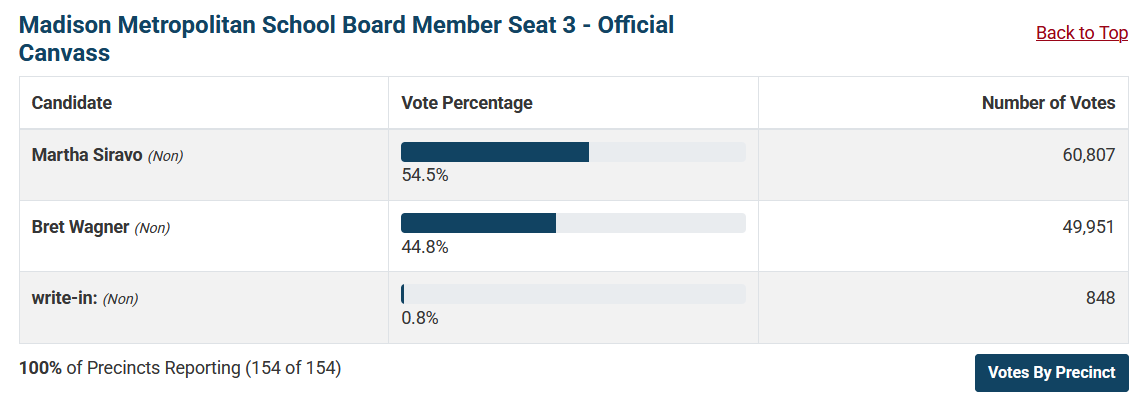
There is not a traditional “two-party” system in Madison. The last time a Republican represented the area was 35 years ago and Mark Pocan won his last election in 2024 by over 50 points (or 182,706 votes). I think most people expect it to be an even larger margin this November. But that doesn’t mean the City and its residents are one-dimensional. In particular, I think about the Madison Metropolitan School Board Member Seat 3 race between Martha Siravo and Bret Wagner. This race was within 10 points and speaks to the type of people that make up the City’s political scene.
Martha’s first point in her plan is to “Help Every Student Win” by introducing Universal Design for Learning (UDL) into classrooms to remove barriers between special and general education. A lot of this stems from her advocacy work with MadTown Mommas and Disability Advocates that started with her personal experience of her child enrolling in special education in Madison.
My work is driven by a belief that public education must be inclusive, accessible, and truly serve the needs of every child
Bret’s front page still reads “Every child deserves to read at grade level. 50% of Madison students, 75% of Latino students, and 90% of Black students read below grade level. We must do better.” There are plans to restructure reading instruction time and improve the existing tutoring programs.
Both want to change something, but in my opinion they draw from the two different sets of principles: emotions and efficiency. Martha saw an injustice in her child’s education system and wants to make sure that no other child experiences the same issues her child experienced. Bret sees a systemic problem with literacy rates that raises concerns for many children; too many to be a tragedy. Instead, they are a statistic that nonetheless needs to be fixed.
Madison is full of bleeding heart, analytical people
The Cap Times ran an article last year from Marc Eisen characterizing a “one-party game” in town that prevents debate and discussion. Paul Fanlund (the publisher of the paper) is a proponent of this thesis, presumably because his preferences are not reflected in the current political climate. But Eisen’s piece is too focused on the national dichotomy of “Democrats vs. Republicans” when we know that’s something that would take decades to take shape again (if ever). There’s a dichotomy here and Paul knows it because his friend and former mayor Paul Soglin was on the losing side back in 2019:
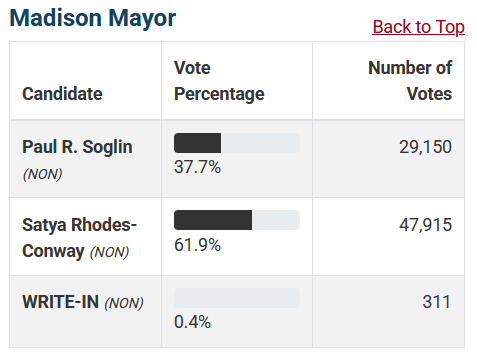
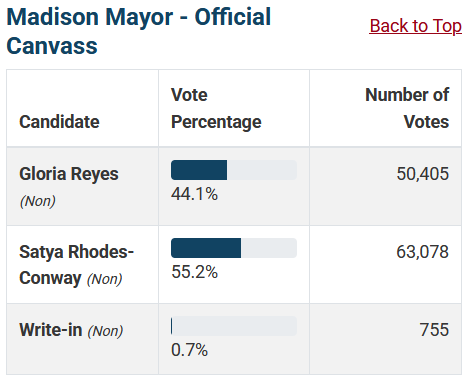
I don’t think moving from a 24 point gap to an 11 point gap in 4 years frames a “uniparty” in Madison. There’s clearly some movement against the incumbent as the total opposition vote count went up nearly double.
But Reyes said it best herself during a debate that Rhodes-Conway is “a policy person… someone who really understands policy” compared to herself who wants to “lean on the voices of our residents” to “build housing in our city that’s practical.” This was in response to a question about the causes of the lack of affordable housing in Madison, to which Rhodes-Conway simply said “we just didn’t build enough housing. And for many years, our housing production, both in terms of rental and ownership, did not keep up with our population growth.”
Mayor Satya has always been the efficiency candidate for housing in Madison. It was proven true this year when she introduced three different housing reform packages (under the Housing Forward label) that passed Common Council, including allowing duplexes in all single-family zoning districts by right:
Madison wants to build

Last Wednesday brought a smile to my face for nearly the entire day. Our mayor, Satya Rhodes-Conway, announced along with 11 alder co-sponsors and pro-housing community groups three ordinance changes to incre…
Reyes was the “emotions” candidate who represented voices like Fanlund, Soglin1, and Nextdoor posters who see allowing building by right as an attack on neighborhood character and the favorably slow approval process. These themes were repeated in the other big 2023 issue, BRT implementation, which Reyes said “won’t benefit all of Madison equally” because it moved from coverage models to ridership models. Rhodes-Conway countered that bus rapid transit is designed to be fast and frequent and “does not go everywhere, sort of by definition”. By making ridership the goal, riders would have faster and more convenient commutes that would increase overall ridership (which we have seen in year-over-year data).
Because the “conservative” faction isn’t a political force in Madison, we now move to these emotionally-driven (justice, compassion, frustration, betrayal) themes vs. pragmatic, analytical, and results-driven motivators. But every issue exists on this spectrum and it’s impossible to say that one person is always going to vote “emotions” or “efficiency”. I certainly didn’t!
In 2023, I voted for Mayor Satya. In 2024, I voted for the City referendum but neither of the two school referendums2. In 2025 I voted for Bret Wagner. I would say I fall heavily on the analytical side of the debate.
But at the same time, I’m adamantly supportive of making sure no one else has to die on a dangerous street and I would decrease car speed and volume to achieve those goals. This would be at the expense of adding 1, 5, and maybe up to 10 minutes per commute multiplied by the number of vehicles making those “more efficient” daily trips. It would be worth it. I think we made the correct emotional decision by removing peak-hour lanes on Willy Street and I hope we look for more opportunities to bring safety to streets with vehicles driving recklessly because they are designed to accommodate that recklessness.
Each Madisonian has their list of priorities. They are likely to be emotionally or analytically driven. It could even be a combination, like someone who is personally frustrated by a $200 rent increase that they understand is a symptom of under-supplied housing units. The “uniparty” doesn’t exist, and it certainly wouldn’t exist to just box Fanlund out, but the feeling exists because problems need to be solved and more people feel that those in charge are working towards fixing them.
Where do we compromise?
This all brings me to Fanlund’s most recent Madison-focused opinion piece about an “appeal to Madison’s ruling ‘uniparty’ ”. He restates Eisen’s thesis and then draws on the newest disagreement about the resulting property tax increase from the school referendums. But he jumps right back into his biggest axes to grind including name-calling and dismissing of his allies, the fake housing “crisis” that he instead prefers to call a situation, and the focus on bike network expansions and road diets for traffic safety. The “appeal” to the “uniparty” is to not “demonize any voice concerned with retaining some charm of the city and its neighborhoods3, and keeping roadways passable for constituents who drive cars” and to “find a balance between staggering tax increases and spending restraint — maybe even by deigning to listen to people outside the uniparty bubble.”
These Madison opinion pieces always get a rise out of me. It’s frustrating to read that cities can’t change because they match someone else’s ideal vision and I’m problematic when I recognize that the vision doesn’t work for me and a majority of Madisonians. When we try to remedy failed policies, it’s seen as ignoring voices even though those voices made decisions for decades and we decided this democratically. I also initially misinterpreted what Fanlund was asking for. He is not proposing a compromise on policies “we” (I disagree with Fanlund on most things so I must be a part of that group) believe and have been working on implementing, instead he is insisting that people who disagree with him should reevaluate their opinions to match his.
I don’t think this will go anywhere, but that’s the one great thing about being in the minority of political power: you get to complain. Sometimes that swings enough people your way to regain control, other times you are stuck in perpetual backseat driving.
For example:
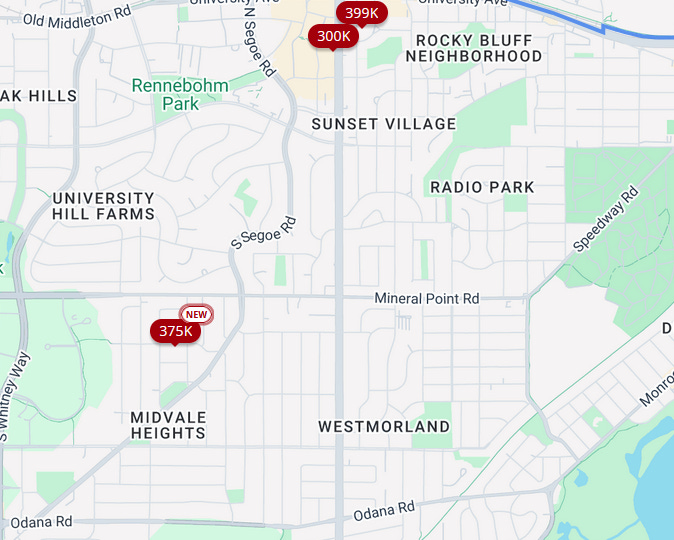
As a result, you have large, nondescript, Soviet-style apartment buildings4 popping up on any available ground throughout the city. It makes me yearn for those long-ago days of debate about Sequoya Commons, the comparatively attractive retail and housing infill development at Midvale and Tokay boulevards on the west side. That project, which includes a branch of the Madison Public Library, began in 2007, those bygone days when considering neighborhood input was still a thing.
Sequoya Commons made it through because of alders recognizing what was best for the City. It was not guaranteed. The Common Council meeting that granted approval ran past 1 a.m. and had over “50 speakers, mostly residents who opposed the development.” The scope of the project may have changed due to input, but doing this over and over again only makes it harder for residents to find housing. If we had it the way neighbors wanted it, it would not be the attractive build that it is and we would be in a deeper housing hole than we currently are.
Fanlund might need to adopt new positions that don’t alienate the renters that makeup the majority of the City or otherwise find positions that net more voters for his goals. For now, renters and future homeowners are looking to find housing options that don’t cost more than 30% of their income.
Of course, you can tell those voters to kick rocks, work harder, move somewhere else than Madison, and don’t expect things to be given to you. But I don’t think that’s a viable strategy. He framed a sizable opposition this summer to making duplexes by-right (it passed unanimously at Common Council), which is how to build incremental housing by choice of the property owners without needing “Soviet-style” housing. It’s really hard to persuade people, who spend the largest portion of their income on housing, that the ideal policy is no new, timely apartment buildings and also no expanding any of the smaller owner-occupied options in areas where people want to live.
If Fanlund and people outside of the “uniparty” (which I firmly don’t believe exists in the sense it’s been imagined) want to regain some aspect of control, I would offer the following compromises5 for consideration:
Restructure the Common Council to be a body elected in November general elections, every two years, with 10 at-large seats rather than the existing 20 location-based seats. Make the positions closer to full-time jobs and set clear expectations for committee and community engagement.
Move Madison Metropolitan School District leadership under the mayor to provide accountability for a currently low-salience elected position.
Implement some kind of PAYGO system for budgeting purposes that would require cutting consulting contracts if there is a request to hire consultants for a different project. Increase City Staff capacity instead at lower costs.
Common Council Reforms
We have done the Common Council reform dance before: we are now electing half of Common Council every year in non-general elections and we are bound to see less turnout and growing domination from higher propensity voters. I think Fanlund believes more conservative voices would likely flow to his side of thinking for local issues. I personally think it’s better for people to vote and if making it “we vote once every two years in November” rather than every year in April is better for everyone’s schedule, let’s do it.
I would like to see us move away from “area-centric” leadership. We are a city that has city-wide goals. If we force people to represent their specific area, they will likely oppose specific policies or projects in their area, even if they benefit everyone as a whole (see Sequoya Commons, I’m a big fan of Chocolate Shoppe). It would also remove some of the alder-bias on housing projects and make things that should be built easier to build because a group of very loud neighbors disagree with the impact. If the Comprehensive Plan allows for this building type as an appropriate use, we should be able to build it. This is something that Chuck Marohn discussed with Stephanie Nakhleh when trying to balance community input with action and building systems that work.
When I talk about re-localizing decision-making… I mean restoring local systems that are capable of acting on community values, not just responding to noise… Right now, our local governments are overbuilt for input and underbuilt for action. Everyone has a chance to speak, but nobody feels heard.
…
I’d say: work to shift the default. If you have a comp plan that says “more housing,” then the next step is to reform your code so that small-scale, by-right development that aligns with that plan doesn’t need a permission slip every time. You’re not ignoring the neighbors, you’re respecting their voice in the plan, not privileging it at the podium.
There’s nothing stopping a “West Side” party that focuses on electing a West Side alder to one of these seats. They can beat the drum for specific West Side neighborhood issues. There could even be a “Neighborhood Voices” party that changes the Comprehensive Plan to defer to immediate vicinity property owner feedback. But moving the default to be focused on City issues and not alder district issues is a net positive change.
This is risky to propose in the current pro-housing political climate. We will see what happens in the April elections, but we are a few checkboxes away from being a housing-ready city and momentum is on the pro-housing side. Moving from 16ish pro-housing alders6 out of 20 to potentially 5 or 6 out of 10 in an at-large contest (based on the mayoral results) is a gamble7. But I think it’s better for our discourse to focus around general policies and goals (that we legalize in the Comprehensive Plan) than having proxy-fights over specific projects.
There’s a lot of turnover in Common Council and I think that stems from it being a part-time, thankless, and exhausting job. It demands the most passionate people (either in support of ideas or in opposition to ideas) rather than the best alders. I think some can be both, but at the very least we shouldn’t have alders campaigning on “I will show up to every meeting because the incumbent did not” and have that be part of a winning message. That’s a flawed system. This spring seven alders (out of 10 seats) will run unopposed. People either really love their alders or no one really wants this job.
But I’ve heard arguments for and against this and I’m the least committed to better pay/being full-time in these reforms.
MMSD needs accountable leadership
Superintendent Gothard was selected in February of 2024 by the MMSD board. Following a search committee (from a consulting group) narrowing it down to three finalists and interviews by a student panel, a parent panel, and the board, Gothard received unanimous approval for his contract starting before July of 2024.
Here are the most recent and most competitive election vote totals for the seven MMSD Board Members:
In their most recent election, five members ran unopposed. Seats 6 and 7 are up for grabs and will have contenders (per filed papers) this spring but I have not vetted the quality of candidates. The positions are for 3-year terms and are at-large seats (you have to reside within MMSD limits and be 18 years of age), so with enough name recognition you can lose one election and run again the following year (potentially unopposed) for a different seat.
Following a string of controversies (1, 2, 3, 4) and the revelation that taxes are going to go up a lot because of those 2024 referendums, now is the time to consider moving MMSD accountability to the mayor and executive authority. Right now the buck stops with seven board members who see the same 40,000 to 100,000 voters, in different years, and most of the time without opposition. Are these voters any different than the 113,000 voters from the 2023 mayoral election? Probably8?
But I think it’s easier to campaign for school reform when it’s the mayor’s authority to pick members who will make decisions that align with the mayor. If budgets are a pressing issue, the mayor won’t appoint budget-agnostic board members. And in a world where everything is housing it might make sense to have MMSD leadership and City leadership align to make schools and surrounding environments friendly for families or to work to help city finances. But for the reverse argument, see Chicago’s recent switch to an elected school board that (I’ve been told) received a major push from Mayor Rahm Emanuel’s overreach on school closures.
Build City Staff capacity and spend less on consultants
In an “Abundance”-like argument, I would like Madison to spend less on consultants and more on staff to build institutional capacity. Consulting costs deserve an entire investigation and not a few paragraph blurbs and I’ll acknowledge this is mostly a gut feeling. But having watched us move from at least $100,000 in consulting fees and a two year timeline to $24,000 of staff time and completed in two months for the Willy Street Lane Closure, I would like to have a mechanism to hire staff for longer-term positions than to constantly cycle through firm after firm that charges probably more than double. I don’t know if moving from consultants to City Staff would be a 1:1 replacement or cost savings measure. It feels like it would, but then again, health care. But in the era of welfare fraud becoming more common (1, 2, 3), it’s critical that services rendered are real and that we also don’t spend significant resources ensuring it’s real. Hire from within instead and make sure your staff performs well.
Let’s Dance?
I am not a card-carrying member of the “uniparty” and I do not represent the majority of Madisonians. But I propose these reforms as a way to try and meet in the middle. I think a lot of these reforms force elected officials to make sure they are doing a good job. It does centralize control, but it makes it easier to oust those who aren’t doing it well enough to keep a majority. Compromise requires giving something up. I’m interested to see if the non-“uniparty” members want to play ball or instead hope that the ball randomly rolls back to their side.
More from Counting Cranes
Gilmore girls: my fictional Strongest Town

A running joke among urbanist communities is the need for stories, movies, or shows that portray the benefits of building more homes. Far too often, the Hallmark movie features a “greedy, out-of-touch developer” as the villain that learns the folly of their ways and decides not to build the large multifamily building as they fall in love with the person…
Madison is pro-people, not anti-car

Sometimes I write at the inspiration of positive stories. For example, I felt inspired by Progress and Poverty’s Uniformity Does Not Preclude Land Value Taxes to look at what the Wisconsin Constitution has to say about LVTs. You can see that here:
Who had his own, complementary piece to Fanlund’s “appeal to the ‘uni-party’ ” that hasn’t been referenced yet but you should read when it’s linked for context
I’m putting a target on myself for this but in the spirit of not allowing the “uniparty” strawman to exist I will defend this vote
I disagree that Madison has a lack of charm and want to definitively state that charm is in the eye of the beholder. Population growth is on my side though
I would love to know which ones in particular are reminiscent of the USSR
I’ll add a reminder that with an 11 point cushion for a somewhat more contentious election, anyone who thinks Mayor Satya is doing a good job is holding all the cards. This is an attempt to bridge some gaps but by no means would these cede authority to people opposing Mayor Satya. It’s give and take, you can’t expect to just take with no leverage
Shout-out to Mike Zenz for putting together this YIMBY score index, give it a look
It would also allow for the Madison Bikes Lobby Mafia to run for an official seat!
And maybe the mayoral election should also be a general election in the fall