


*Update: Common Council unanimously voted for the preferred design option. You can see my initial thoughts here: Common Council Rejects a Safer Regent
Two lanes. 10 feet each. That is all Regent Street needs to be a successful street in Madison.

This is my thesis and I need to state it clearly at the beginning. Engineers, business owners, and drivers will say that this is a complicated area. It’s been nearly a year since Madison City Staff began discussing improvements to Regent Street. There’s been months of planning, engaging, reviewing, and discussing a little less than half a mile of road.
They say it’s complicated because there are 12,000 people located in the census tracts just north and south of Regent. Hundreds, if not thousands of UW-Madison students walk to classes each semester from these neighborhoods. Local businesses—bars, restaurants, bike shops, bakeries, book stores, and more—reside on the designated “community main street” where people spend time and money. Hospitals are just around the corner and Camp Randall looms in the distance. WisDOT estimates over 17,000 vehicles drive through Regent Street each day. These are all parts of a complicated system with their own needs and their own priorities that takes an adept city planner to balance effectively.
They say it’s complicated, but not complex1; as long as you understand the models and the formulas, you can plan an effective street. Complexity implies a level of adaptability that cannot be predicted. They will say that the street is defined and there is no possible evolution except the one that exists on the preferred design option.
The preferred design option features two lanes with additional left turn lanes at intersections. At its widest, the lanes will be 14 feet wide2. This is a reduction from four lanes (two general lanes and two peak-hour lanes). There will be expanded sidewalks (from 5 feet to 9 feet). There will be no bike lanes. There will be parking.
Streets are not complicated, they are complex
I don’t agree with the engineers on this project. Clearly, a lot of people also disagree because the Legistar document is drowning in links to public comment.
I tend to disagree with the engineers in general. When I conducted a Crash Analysis Studio at Prairie and Raymond two years ago, I walked the site with staff. They removed an improperly planted tree, trimmed some foliage covering street lights, and added an unenforceable “no turn on red” sign. These were the easy steps to take for a “complicated” area that features a truck route, bus route, and 11,000 vehicles per day. The hard step of experimenting with removing a right turn slip-lane, even for a few hours, was a step too far even after a tragedy.
When my friends advocated for removing peak-hour lanes following the third crash into the same coffee shop on Willy Street, staff said it would be a poor use of resources. Other areas in Madison are a higher priority on the Safe Streets list of projects; do we want to redirect staff time and funding to something staff didn’t believe would make a significant difference?
Streets are complex because humans adapt. When you remove peak-hour lanes, which prevent cars from flying 40+ mph in the lane closest to the sidewalk, people will tell you they feel safer. It will show that the models are wrong and you can’t predict every detail definitively. The best thing we can do is allow streets to grow naturally and adapt as needed. Small things like paint, planters, and bumps will cause drivers to slow down. People will reclaim the space and more people will want to be in the area. We cannot predict exactly how or when it will happen, but it will occur if allowed and nourished.
It puts a stake into the heart of “complicated” and removes the guise of balancing needs. There has been a preference, for decades, to build streets like they are roads and to prioritize vehicles moving on them. Any potential change is a threat to the order that needs to be maintained. This is how Regent Street is currently designed. It is wide, it is straight, and you can go fast. Level of service should be high and cars should not have to wait. There is no environment that will allow the street to flourish; it is artificially stunted.
When trials reveal that streets that resemble Regent can be made safer, it puts the onus on staff to reveal their design preferences directly. Do we design for safe? Do we design for pleasant? Do we design for convenient? Why can’t we try new things?
Vision Zero Goals
When I consider voting for elected officials, I look for safety track records. I want to see candidates who acknowledge that the 40,000 people who die in car crashes each year are dying because of poorly designed infrastructure. The 8,000 pedestrians who die are not to blame for failing to wear bright clothing, to look both ways, to push a button, or to carry a flag. They do not deflect responsibility on to anything but the environment that allows the people behind the wheel to cause their damage.
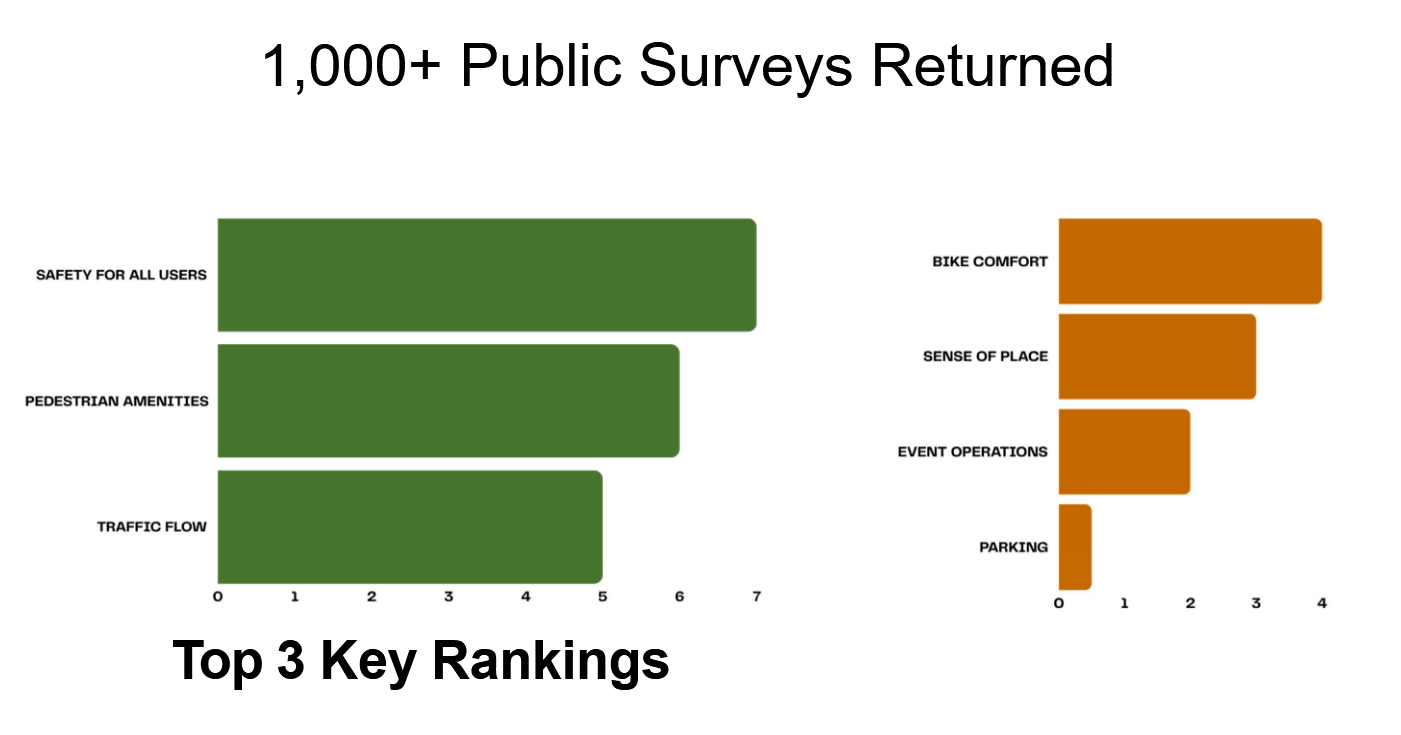
I am lucky to live in a city that recognizes Vision Zero as a desirable policy outcome. Zero deaths on roads, bikeways, or sidewalks. It is admirable and important. Madison has Vision Zero policies because the mayor and a majority of Common Council (I count at least twelve) have indicated to voters that they prioritize Vision Zero as a policy. The Madison Bikes candidate questionnaire asks candidates if they would commit to implementing Vision Zero policies even at the expense of removing car parking or general travel lanes. The most recent survey explicitly asked candidates to rank four different priorities, where eight of ten alders up for election last spring placed “ensuring a safe environment for all road users” as the top priority and “moving vehicles fastest” at the bottom.
We (Strong Towns Madison helps design the questionnaire) ask these questions because we know they are defensible, but at times, unpopular opinions. Businesses will say that on-street parking is the lifeblood of their business. Opponents claim the “bike mafia” are getting too many projects, and “they don’t even pay for roads like I do!” because of the wheel tax. The thought of losing 60 seconds on their commute because they missed a light cycle will cause the collapse of society.
We ask these questions because our children, siblings, parents, cousins, friends, co-workers, and neighbors die on our streets. Nearly four months ago Sasha Rosen was killed by a vehicle allegedly driving 62 mph. I clench my fists reading his mother’s letter to the drivers of Park Street. Alders recognize the tragedy and hope we can learn and prevent this from happening again.
203 people have died in Dane County since 2021. We cannot learn this lesson fast enough. I think of Derrick Allen, Lucy Kitzerow, and Derek Schwarting. We have solutions, and we can implement them to prevent tragedies, it’s just a question of if elected officials will stand up for them.
Regent for the people
There isn’t a more apt name for this street. A person appointed to govern because the legitimate ruler is a minor, ill, or otherwise unable to rule. We have our “regents” of Regent Street who vastly prefer the status quo to the kind of place Regent could evolve to be. The engineers who follow outdated guidelines, the employers and businesses who need every available parking space so commuters don’t have to walk a block or pay to park their vehicle for several hours a day, and the drivers who want their commute to be easy and avoid congestion (in the middle of the City no less!); they rule over this process and claim that there can be no other way. For the masses, 4 feet more of sidewalk! It’s all that can be spared.
If we designed this with the people in mind, we would listen to their preferences. Safety above all else.
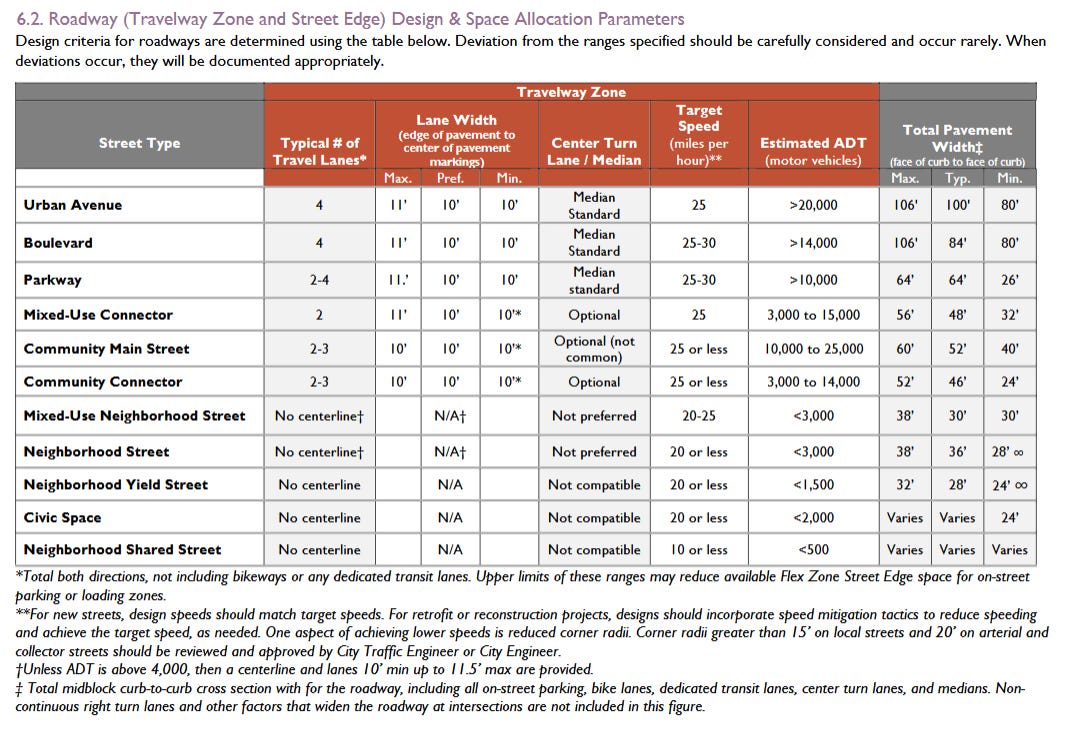
Johns Hopkins Bloomberg School of Public Health studied lane widths across seven cities in several states. They found that narrow lanes save lives. Crash reductions are significant when reducing streets from 12 foot lane widths to 9 feet. The conventional wisdom of “larger lanes are safer” is wrong. The goal that cities and states should aim for, especially in urban contexts, is to narrow lanes as much as possible (10 feet)3. When engineers want to go wider, they need to justify that decision. NACTO, the National Association of City Transportation Officials, also agrees with this guidance. Notably, the City of Madison agrees with it too! The Complete Green Streets guidance calls for 10 foot lanes on “Community Main Streets”:
Elected officials were voted in because they prefer safety over convenience. They want to reduce deaths to zero. They are interested in making dynamic places where people want to be rather than subsidizing parking lots.
Staff have shown a desire to ease vehicle access. They can tell you how long cars will have to wait at an intersection, but not how long people will need to wait to get a safe crossing. They claim lanes need to be wide for 5 ambulance trips a day4, but not narrow to reduce the 22 injuries that have occurred to pedestrians and bikers since 2017 for the vast majority of the remaining time (more than 99%).
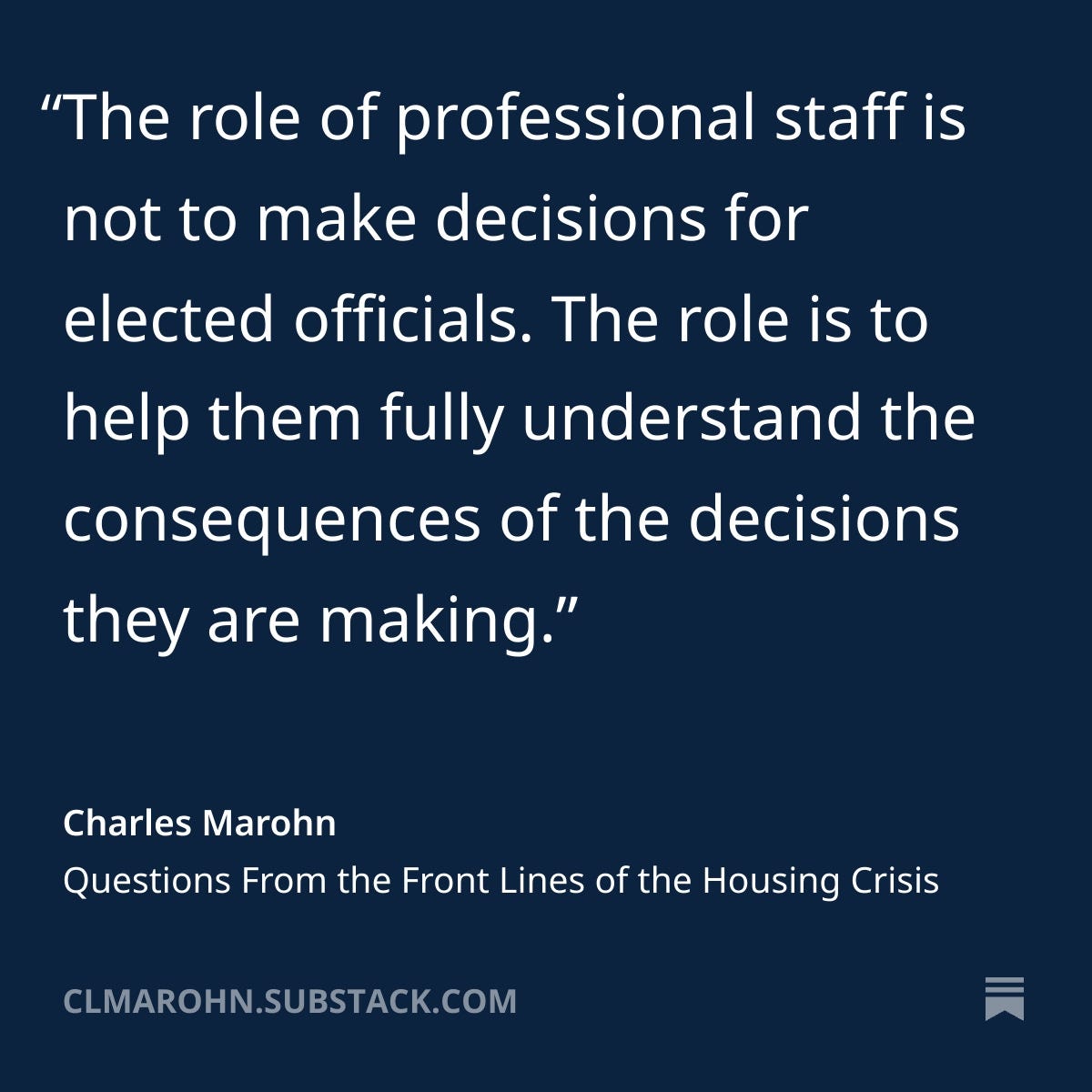
There’s a miscommunication here. In the words of Chuck Marohn:
It is now Madison Common Council’s time to ask staff to help them understand the Regent Street redesign.
Is this design truly prioritizing safety like Complete Green Streets and Vision Zero would have us do?
What would a “safety first” redesign look like? What amenities could we add to Regent with the extra space?
Why are 14 foot lanes required for a Community Main Street? When designing with 14 foot lanes, are we designing for the majority of uses, or for small, niche uses?
Streets are a liability, the people and places around them are the assets and investments we want to promote. Have we conducted a financial analysis on the return on investment needed for a road that prioritizes vehicle passage (property damage, reduced business, less housing) compared to a street that prioritizes safety and people (improved property values, better community spaces, more business opportunity)?
I hope alders will prioritize safety over vehicle convenience. I hope they can see that wide lanes will cause more damage. Approving the design as is would be admitting to not prioritizing safety, which for some would break promises made during campaigns.
There is no excuse this time. Regent Street is not under state jurisdiction. Common Council is in control of what this design looks like and every guide and handbook is telling them they can make it safe.
Two lanes. 10 feet each. That is all Regent Street needs to be a successful street in Madison.
Addendum:
I’m adding previous alder statements on safety to this article.
Sasha Rosen Comments:
Evers: “Like many of you, I have been deeply moved by the death of Alexander "Sasha" Rosen”; “In 2020, Mayor Satya and Common Council embraced the Vision Zero concept for Madison… however, Thursday's loss was a sobering reminder that our work is far from being done.”; “In light of this terrible tragedy, it’s clear that we have more work to do”
From previous campaigns:
From Madison Bikes 2026 Questionnaire
Ranking designs of streets:
A: Moving vehicles fastest
B: Ensuring safe environment for all road users
C: Investing wisely in financially prudent infrastructure commitments
D: Moving the greatest number of people
Ochowicz: B, C, D, A
Verveer: B, C, D, A
Mayer: B, C, D, A
Zhang: B, C, D, A
Figueroa Cole: B, C, D, A
Matthews: B, D, C, A
Lieberman: B, D, C, A
Glenn: B, D, C, A
Quotes from explanations:
Ochowicz: “safety is the number one priority”
Verveer: “I’m deeply committed to achieving Vision Zero”; “I would prioritize safety design improvements on streets where high traffic volumes and speeds contribute to significant risk”; “to achieve Vision Zero, we need to continue expanding protected bike lanes, improve crosswalk visibility, lower speed limits in high-risk areas, and design roadways the prioritize safety for pedestrians, cyclists, and drivers alike”
Mayer: “getting cars from point A to point B used to be the highest priority, but we no longer pursue that, instead placing importance on pedestrian safety and quality of life in surrounding areas”
Zhang: “[Sasha Rosen’s death shows] exactly what happens when safety isn’t prioritized”; [in reference to Regent] “this is a great opportunity to prioritize alternative modes of transit and safety”; “putting in better pedestrians crossings or protected bike lanes not only keeps people safe, but makes driving less stressful”
Figueroa Cole: “safety comes first, full stop, and that is reflected in both the Complete Green Streets Policy and our Vision Zero commitment here in Madison”; “a street that moves cars quickly but costs someone their life has failed”
Matthews: “safety is my highest priority and I hear that concern from constituents as well”
Lieberman: “safety has to be the number one thing”; “we saw the sheer heartache and grief that can come from unsafe road design”
Glenn: “we should be pushing for safety and repairs rather than more capacity”; “ensuring a safe road environment for all road users is my absolute top priority”; “no one should risk their life just to cross the street for a bus stop”; “prioritizing ‘speed’ usually comes at the direct expense of safety and local business vitality”
From Madison Bikes 2025 Questionnaire
“Madison adopted CGS policy that prioritizes walking, biking, transit, and green infrastructure over driving and parking… are you committed to supporting the implementation of this policy in your district and the city, especially when the project requires the removal of car parking or general travel lanes?”
Ochowicz: Yes
Field: Yes
Verveer: Yes
Vidaver: Yes, where possible. Need to balance community needs
Mayer: Yes?
Lankella: Yes
Figueroa Cole: Yes
Lieberman: Yes
O’Brien: Yes
Glenn: Yes?
Guequierre: Yes
Madison Bikes 2023 Questionnaire
“Madison recently adopted CGS policy… are you committed to implementing this policy?”
(same question as above, I added alders who hadn’t responded in later elections)
Duncan: Yes
Tishler: Yes
You may recognize this from “Strong Towns: a Bottom-up Revolution to Rebuild American Prosperity”. I was reminded of this while studying for a panel discussing the book. Come join me at Sequoya Commons for Alder Tishler’s District 11 Book Club, June 24th!
Changes occur within meetings, previous geometry shows 14’ wide lanes but more recent presentations have discussed 13’ wide lanes
Snow and bus routes complicate things, so this might be 11 feet
Most of these trips are not “hot” (lights flashing), meaning it’s even lower than what they are claiming they need